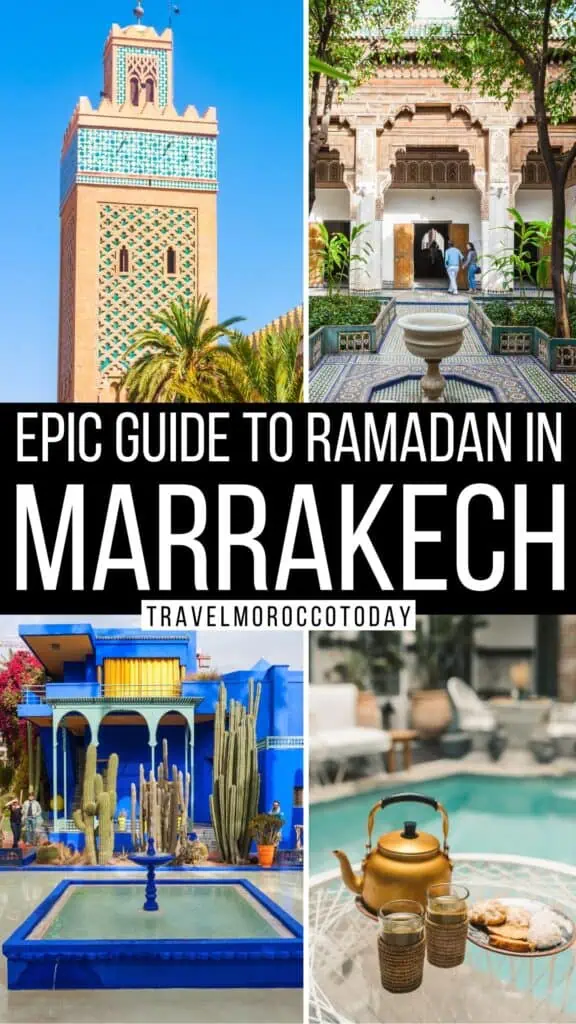
Spending Ramadan in Marrakech? If so then I am SOO excited for you. First of all, the food that is served during Ramadan is awesome. Secondly, visiting Marrakech during Ramadan is a great way to learn about local customs and culture.
Added bonus? 80% of businesses in the city will operate as usual. So, you can still visit top attractions and eat at a ton of great local restaurants without any issue.
So, do not freak out or worry about visiting this iconic city during Ramadan. Just embrace it. You might even like it since the Medina is a bit quieter during the day.
Then, once everyone breaks the fast, the city comes alive in the evening and is a wonderfully fun place to be.
Honestly, I love celebrating Ramadan in Marrakech and think that you’ll love it too. I have been in the city for the past two holidays and can’t wait to celebrate my third in 2025.
Just be respectful of locals and try not to eat/drink while walking down the street since everyone is fasting. No one will get angry, but it is just a bit rude to eat and drink in front of people who are hungry and thirsty.
Don’t worry though, you can totally eat and drink in any restaurant that is open during the day.
I also would try to dress a bit more conservatively (if you’re a woman) since this is a sacred holiday and you want to be respectful of locals living in Marrakech.
Finally, I would think twice about drinking alcohol since this is not allowed in Islam. In fact, because this holiday is so holy, some locals can’t even touch a container with alcohol in it.
In fact, some places may not even sell alcohol during Ramadan. Therefore, I choose not to drink at all during Ramadan. However, it is a personal preference and alcohol is available if you want it.
But, this is just a very brief overview of Ramadan in Marrakech. Let’s look at this holiday in-depth and find out exactly what you need to know before you visit.
IMPORTANT: Google says that Ramadan is set to begin on February 28th and end on March 29th or on the 1st of April in Marrakech. Please note that this is an estimate only and Google can be off by a couple of days.
The exact start date is determined by the cycle of the moon and will only be confirmed the night before the holiday begins. I know last year Google was off by about three days. However, Ramadan usually starts two weeks earlier than the year before.
This post may contain affiliate links. Please see my disclosure for more information. As an Amazon Associate, I earn a small commission from qualifying purchases.
Table of Contents
What is Ramadan?

A lot of people know that Ramadan involves a month of fasting. However, many people don’t know that this holiday celebrates the moment when the Quran was revealed to the Prophet Mohammed.
As a result, this is the holiest month of the year for Muslims and occurs during the ninth month of the Islamic calendar (The dates change every year because the holiday doesn’t follow the Gregorian Calendar).
For Muslims, this month includes daily fasting from sunrise to sunset. That means no food, drinks, or smoking during daylight hours.
While practices can vary, my partner and I choose to refrain from kissing and intimacy throughout the day, as he feels this would invalidate his fast.
Although my partner’s practices might not be universal, what you should be aware of is the fact that this is a deeply pious time that emphasizes fasting, aka one of the five pillars of Islam.
Most Muslims enjoy fasting because they believe it fosters gratitude for all of the beautiful things that God has given you.
This gratitude then enables people to focus on prayer, giving to others, and helping the poor as they strive to become closer to God.
That said, children under 16, individuals who are ill, women who are menstruating, pregnant, or nursing typically don’t fast.
For example, my partner’s mom, who is diabetic, is exempt for health reasons. However, those who can fast often cherish this time of year.
However, locals can’t fast all day every day. So, there are two important meals that Muslims have before sunrise and after sunset. Suhur and Iftar.
Suhur is a pre-dawn meal that usually takes place around 4:00 am. Iftar is a post-sunset meal that usually takes place around 7:00 pm.
These meals typically include classic Moroccan foods like msemen, harira, chebakia, and dates. ITBH, usually have Iftar at my boyfriend’s house since his mom is an amazing cook. It’s honestly so good and I am getting hungry just thinking about it.
Anyway, the sound of cannons or sirens is used to the start of Suhur, the end of Suhur, and the start of Iftar. So, don;t be surprised if you hear a giant BOOM while walking around the Medina.
This is totally normal and just lets people know that they should run home and eat.
Finally, Eid Al-Fitr marks the end of Ramadan. It is a time when families get together to eat Beghrir, sip on mint tea, dress in traditional attire, and enjoy the day.
Local Tip: Many restaurants in Marrakech will have a special Ramadan menu for Iftar. So, you’ll definitely be able to enjoy a lot of special Ramadan-inspired foods while you’re in the city.
Should You Visit Marrakech During Ramadan?
Yes!!! I love being in Marrakech for Ramadan. Not only do I love eating Iftar with my partner’s family, but I find the Medina to be a bit quieter during the day since most locals are chilling at home
Then, the city comes alive at night with fun and festivities once everyone has had Iftar and is ready to enjoy their night in Marrakech.
However, you’ll generally find that because Marrakech is such a big city, most businesses will remain open for the holiday (not true in more rural areas).
So, most attractions, tours, and restaurants will operate as normal. As a result, Marrakech really doesn’t feel all that different during Ramadan.
The souks are a bit more chill during the day and you will probably see people praying in the streets. However, that’s about it.
The city also really gets super quiet around 7:00 pm when everyone is at home eating Iftar and breaking the fast. Yeah, people hear the canons that signal the beginning of Iftar and literally run home.
Therefore, it kind of feels like the apocalypse in Marrakech at this time of day. Literally NO ONE is out. However, this also means that dinner services may be a bit later and that hotel staff may be unavailable as they break the fast.
Anyway, after Iftar most people start coming back out again at 8:00 pm for Tarawih. This is an evening prayer that Muslims usually say at the mosque.
Therefore, if you head to Koutoubia Mosque you’ll see that all the surrounding roads are closed. That’s because people spill out onto the streets as they try to pray in the mosque.
TBH, it’s a really beautiful and special thing to see. So, I highly recommend having dinner at one of the restaurants around Jemaa el Fna Square (like Café Zeitoune or Café Argana). This way you can see this beautiful event in person.
Local Tip: If you want to enjoy Iftar in Marrakech then head to the Amal Foundation or Café Clock. The latter hosts fun cultural activities in addition to serving lots of tasty foods for Ramadan.
Get Your Amazing 7-Day Morocco Itinerary Now!
Planning a trip to Morocco and not sure where to start? Or, maybe you don’t have weeks to sit and do research to create the perfect Morocco itinerary. If so then I am here to help. I have lived in Morocco with my Moroccan partner for YEARS. I created this custom, 45-page, 7-day itinerary so that you could plan the best trip possible with the least amount of stress. Customers are calling this itinerary “brilliant” and I think you will too. So, get yours now!
Tips for Traveling to Marrakech for Ramadan

Like I already mentioned, traveling to Marrakech during Ramadan is very similar to traveling to Marrakech at any other time of year.
However, there are a few things you need to be aware of. This way you can have the best trip possible and enjoy the holiday in Marrakech.
- Google Can Be Wrong When It Comes to the Start and End of Ramadan – Google isn’t always right when it comes to the start and end of Ramadan. Just last year, it was off by a day or two off. So, while Google’s dates can serve as a rough guide, they are just an estimate. The exact dates of the holiday will be determined the night before.
- The Exact Dates of Ramadan Change Every Year – Because the dates of Ramadan are based on the Islamic Calendar, and not the Gregorian Calendar, the start and end dates of Ramadan change annually. Typically, the exact start and end dates of the holiday are only confirmed the night before by the sound of a siren/cannon. However, Ramadan typically starts two weeks earlier than it did the year before.
- The Clocks Will Change and Go Back an Hour -During Ramadan, the clocks in Morocco will go back an hour. This is done to help make fasting easier. Then, when the holiday is over, the clocks will return to normal.
- Be Patient – Be patient with people during Ramadan. They are walking around hungry and thirsty all day. Therefore, they can sometimes lose their temper or be in a bad mood. So, just be kind and patient and understanding. It will go a long way.
- Be Flexible – Generally, things will be business as usual in Marrakech. However, some small businesses and restaurants can be closed for the month or have different hours. So, be prepared for this and try to plan some flexibility into your Marrakech itinerary.
- Not Much Will Be Going On Between 7:00 pm and 9:00 pm – I would avoid making plans between 7:00 pm and 9:00 pm. That’s because this is when the sun sets and people go home to break the fast. After that, people head to the mosque for evening prayers. So, if you’re staying at a hotel, staff members might step away from the front desk or the restaurant to eat before resuming their responsibilities. Many businesses might also close around this time of day as families gather together to share a meal.
- Things Won’t Open Early – Since many Moroccans begin their day before sunrise for Suhur, they often feel tired and prefer to sleep late in the morning. This extra rest not only helps them recover but also makes fasting a bit easier. Therefore, don’t expect much to be open before 10:00 am. However, most major hotels, restaurants, and attractions will still operate as usual, even if they open a bit later.
- Remember That This is the Holiest Month of the Year – Because this is such an important holiday to locals, please try to be extra respectful of local culture and customs during Ramadan. I personally try not to eat or drink in front of my boyfriend while he’s fasting. I also try to avoid alcohol in Marrakech and wear more conservative clothes. I find that doing these small things goes a long way among locals.
- Don’t Travel Into and Out of the City on Eid Al-Fitr – Eid Al-Fitr is a major holiday that makes the end of Ramadan. It’s a time when people typically spend quality time with this family. Therefore, many businesses will be closed. travel can also be challenging due to limited bus and train schedules.
- Restaurants Will Be Open – Most restaurants should be open in Marrakech. So, you should have no problem finding something to eat during your visit.
- You Can Get Alcohol – You can get alcohol (they served it at the bar of my Agafay Desert camp during Ramadan) but I personally would refrain from drinking since alcohol is taboo in Islam and this is the holiest month of the year for Muslims. If do want to drink, remember that many places stop serving alcohol for the month. Many locals also might not even want to touch a bottle of alcohol during Ramadan.
- It is Not Illegal to Eat in Public – You can absolutely eat in public and no one will even say anything. However, it is pretty rude to eat in front of people on the street when they are hungry and fasting.
Get Your Amazing Morocco Safety Guide Today!
Planning a trip to Morocco and worried about safety? Or, maybe you don’t have time to scour the internet for mediocre safety tips from someone who has been to Morocco once. If so then let me help. I live in Morocco with my Moroccan partner and have developed these safety tips after spending years traveling in Morocco alone. I created this custom, 26-page document with 19 actionable tips to help you stay safe and have the best time possible. Get yours now and take the anxiety out of traveling to Morocco.
Best Things to Do in Marrakech During Ramadan

Because most restaurants and attractions will be open, you’ll want to do a lot of the same things that you would at any other time of year.
However, some cool things to do in Marrakech at this time of year include:
- Enjoy the Nightlife – Most locals won’t be partying hard in the club in Marrakech or the best bars in Marrakech. However, the city does come alive after 9:00 pm with beautiful dance and musical performances. You’ll also see the city aglow with lanterns and can watch locals enjoying the end of the fast with friends and family. Cafe Clock is a really great place to go to enjoy live music and a bit of storytelling.
- Watch the Tarawih Prayer – Every night after Iftar, locals head to the mosque to engage in evening prayers. These prayers are known as Tarawih and it is amazing to see thousands of Muslims enter the mosque and pray all around the exterior of the mosque too (yup, it’s that crowded). If you can sit in Café Zeitoune or Café Argana in Jemaa El Fna Square and watch all the people pray around Koutoubia Mosque in the evening.
- Try Iftar – Many restaurants, like Cafe Clock, have a special menu that they serve during Ramadan. It includes dishes that locals typically eat during Iftar, like harira, dates, boiled eggs, mssemen, chebakia, and more. So, embrace the spirit of Ramadan and indulge in some awesome local foods at one of the best cafes in Marrakech. I LIVE for Ramadan and love eating Iftar with my partner’s family.
Conclusion
That wraps up this guide to Ramadan in Marrakech. I hope you feel a little better about visiting the city since almost everything will be open.
It’s also comforting to know that you can eat during the day and that you drink alcohol if you need it. Just remember to be respectful of locals since this is the holiest month of the year.
So, dress conservatively, try not to eat/drink on the street during the day, and try to refrain from drinking alcohol. Do all this and Marrakech residents will be VERY grateful.
Other than that, treat Ramadan as an amazing cultural experience. Take some time to learn more about the holiday, and local traditions, and take a moment to try amazing local foods.
If you enjoyed this post, be sure to join our email list and Facebook group for even more awesome Marrakech travel tips. You can also show your support by buying Kelly a coffee.