
Not sure about the best food in Morocco? Well, you are not alone! Before I moved here in 2023, and picked me up a Moroccan boyfriend, I had ZERO idea what Moroccan food was.
Was it falafel, hummus, and shwarma? Yeah, I just didn’t know since Moroccan food really isn’t a big thing in NYC. So much so that before I moved to Morocco, I had never been to a Moroccan restaurant.
Well, fast forward a few years and I can safely say that hummus, falafel, and shwarma are not Moroccan. Trust me, I have had some pretty horrible falafel in Morocco since it is not something people are used to making.
However, amazing things like couscous, harira, mssemen, tajine, and harcha are famous foods in Morocco that can be found everywhere.
What? Have no idea what any of these must-try foods in Morocco are? Not to worry. This guide is going to go over everything you need to know about what to eat in Morocco.
This way you’ll know exactly what to order and can experience the rich culture of this amazing country through its incredible food.
Before we continue, please note that Moroccan cuisine is VERY vegetarian/vegan friendly. So, anyone who does not eat meat should have zero problem finding food since there are options everywhere.
The tricky bit is when you have a nut allergy or are gluten-free. Nuts are everywhere in Morocco (just Google Amlou) and gluten-free isn’t a thing here since bread = life.
So, if you have an allergy PLEASE bring an allergy card that is translated into Darija/French. This way people know exactly what you can and cannot eat. I would also 100% bring an epi-pen since cross-contamination can happen.
Finally, if you are gluten-free then you can always eat Amlou, Moroccan salads, tajines (sauce usually not thickened with flour), tangia (meat stew), kefta, khili, omelets, Berber Omelets, Kalinti, bissara, harissa, and Raib (like yogurt).
I am going to make a full gluten-free guide to Morocco in the future but for now, that is a great place to start.
Anyway, onwards and upwards to this list of the most amazing foods in Morocco, with local tips on what to eat and how to eat it.
Personally, I think must-try foods in Morocco are tajine, couscous, msemen, harira, zaalouk, amlou, pastilla, kefta, tanjia, and chebakia.
Local Tip: Please try Moroccan foods more than once since A LOT of places make crappy versions of things like couscous, tajine, and mssemen. I know MOST hotel breakfasts include mssemen and it is rock hard, dry, and absolutely awful.
For more authentic versions of foods, try going to local restaurants or taking a Marrakech cooking class in someone’s home. I find home cooking to be 10,000 times better than anything you’ll find in a restaurant.
This post may contain affiliate links. Please see my disclosure for more information. As an Amazon Associate, I earn a small commission from qualifying purchases.
Table of Contents
Best Food in Morocco
1. Tajine (GF/V/Veg)

If you only eat one thing in Morocco, let it be a tajine. It is easily the most famous dish in the country and is named for the cool ceramic dish that it is cooked in. Yeah, you can literally find tajine in every city in Morocco.
The dish is traditionally used in Moroccan cooking. It includes a ceramic plate as a base and a top with a round chimney that has a circular hole to let the steam out.
What I love about tajine is that everyone makes it differently. It can also be eaten by just about everyone since it is gluten-free (naturally and a great gluten-free option in Marrakech) and can be made vegetarian/vegan-friendly.
In fact, just about every restaurant I go to has a vegetarian tajine of some sort. However, other common types of tajine include lamb tajine, chicken tajine, fish tajine, beef tajine with prunes, etc.
Generally, the base (sauce) for most tajines is made using spices like cinnamon, saffron, coriander, and cumin. The food is then slow-cooked with things like dried fruits, olives, lemons, apricots, honey, sugar, and dates to enhance the flavor.
Honestly, everyone makes Tajine differently. So, no two tajines will taste alike, although they will be cooked in the same way and feature a lot of the same ingredients.
This dish will then be served in a Tajine dish and the final product kind of resembles a stew that you are meant to eat using bread as a utensil. Yup, eating with your hands is a THING in Morocco. But, most restaurants do have silverware.
At home, most families like to sit around a table and eat from a giant tajine together. I have done this with my partner’s family and it was really nice.
Local Tip: Tajines will be served to you SURFACE OF THE SUN HOT. Like, you will see the liquid boiling. My best advice is to wait until the sauce has cooled down before eating.
Trust me, I have burned my mouth more than once and it is not fun, especially if you only have a few days in Marrakech.
You also will eat tons of tajine when traveling with a tour group in Morocco or doing a cooking class in Tangier since this is the country’s most iconic dish.
2. Couscous (Veg./V)
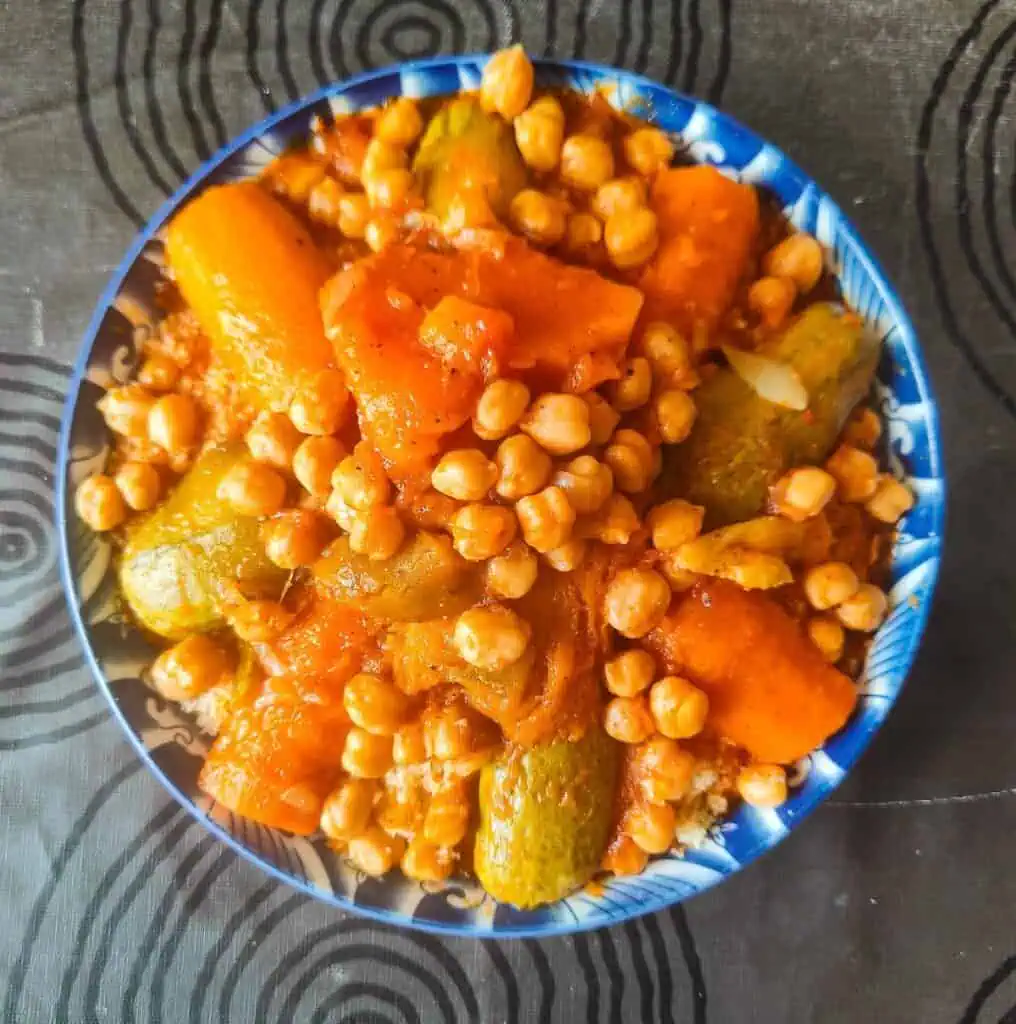
I thought I had had couscous and then I came to Morocco and experienced couscous on a WHOLE new level.
Overall, it is another one of the most famous foods in Morocco So, you will find it all over the country. It can also be made with a variety of ingredients, including fish, chicken, lamb, and beef.
Vegetarian couscous is also popular and is my personal fave since it is served with tons of fresh veggies as well as chickpeas on top.
Generally, Moroccan couscous is made by steaming ground wheat semolina until it is light and fluffy. A savory stew, made with meat/veggies, is then spooned on top since it is flavored with spices like saffron, cumin, and coriander.
The couscous then soaks up the amazing flavors of this stew and is garnished with things like raisins, chickpeas, veggies, broth, etc.
Typically, couscous is served on Fridays (you’ll find this to be the case in most restaurants) and it can be served to you with some sauce on the side. So, don’t be surprised if you get a little bowl of broth on the side.
You are meant to pour the flavorful sauce over the couscous and eat it with all of the yummy toppings.
TBH, most couscous made in restaurants kind of sucks. My partner’s mom makes amazing couscous and I basically only eat her’s since other couscous I’ve had can taste kind of mealy.
If you want to try home-cooked couscous, book a private cooking class in Essaouira and ask if you can make couscous since this is a great way to try authentic Moroccan couscous.
Trust me, once you try REAL Moroccan couscous you’ll never want to eat any other type of couscous again. You also typically eat it with a spoon since all the toppings are very tender.
Local Tip: Couscous is made with Semolina flour and is NOT gluten-free. However, you can ask a restaurant to make it using rice instead. I actually know a gluten-free place in Essaouira that makes couscous with corn.
They can usually do this for you if you are gluten-free since rice is pretty common here.
Also, if you see couscous on the menu always ask if it is being served that day. Many restaurants only make it on Fridays since this is when most Moroccans go to the Mosque and have a meal together afterward.
Finally, Seffa is a type of couscous that is well worth trying. It can be made with rice, couscous, or vermicelli and is served with butter, cinnamon, powdered sugar, and almonds on top.
I know it sounds weird but it is SOO good. I usually have it with vermicelli and LOVE it. I made it while enjoying some of the coolest things to do in Tangier and loved it.
3. Pastilla or Bastilla (Veg/V)
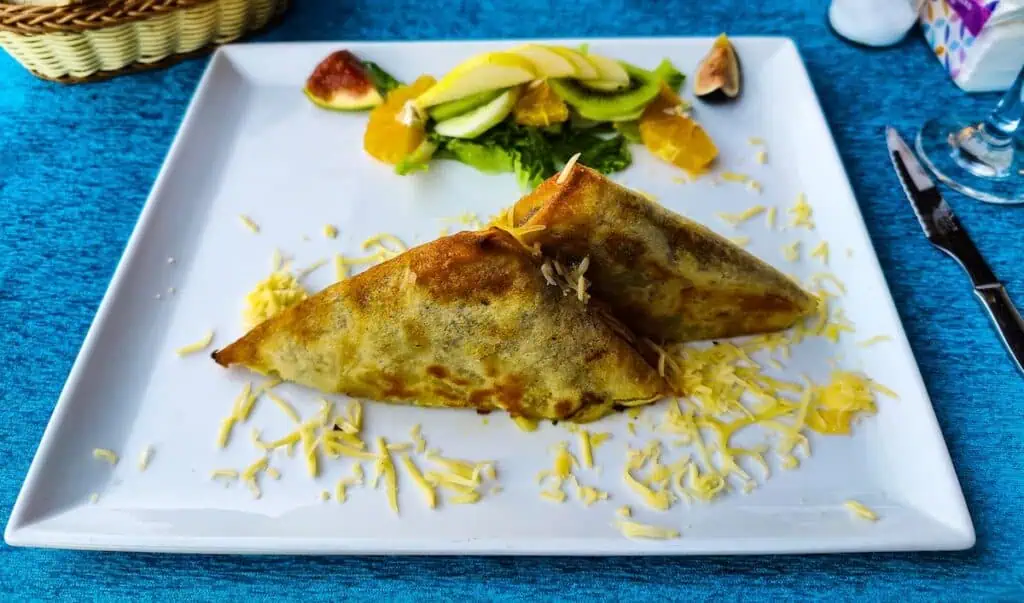
I actually hadn’t tried pastilla until recently because my partner said, “It’s gross.” Well, I think he is totally wrong and absolutely loved it.
I tried it in Sidi Ifni and mine had this crispy almost phylo-dough-like crust that with filled with a flavorful assortment of veggies. They were cooked with saffron, cinnamon, ginger, and coriander and were super tasty.
Historically though, pastilla is usually filled with pigeon meat. However, since a lot of people no longer want to eat pigeon you can also find it made with chicken, seafood, and even veggies.
These fillings are all cooked with the same spices mentioned above. They are then put inside fresh dough that is baked with the filling until the exterior is brown and crispy.
The one thing that my Pastilla was missing was some powdered sugar and cinnamon on top. It adds a nice sweetness to the dish and is how this food is normally served.
Sadly, some restaurants go overboard with the sugar and your pastilla can taste more like a dessert than an entree.
4. Loubia (GF/V/Veg)

Loubia is amazing and is this rich and flavorful white bean stew that is cooked for many hours. It is made using spices like cumin, paprika, and garlic as well as olive oil, onions, and tomatoes.
Traditionally, this stew is made with lamb or beef. However, my partner’s mom makes an amazing vegetarian version since my partner doesn’t eat lamb or beef. Yup, he is like the only Moroccan vegetarian I have ever met.
Typically we just eat our Loubia with a spoon and some crusty bread. However, I do know other people who sometimes eat it with couscous.
Either way, it is super delicious and is one of the most traditional foods in Morocco. That being said, Loubia usually isn’t on the menu at most restaurants and can be REALLY hard to find unless you go to someone’s house.
So, if you want to try Loubia, I suggest signing up for a cooking class and asking if they can teach you how to make it.
Planning 7 Days in Morocco? Start Here.
Skip the hours of research and guesswork. I created this 45-page, step-by-step Morocco itinerary based on my years of living and traveling in Morocco. It lays out where to go, what to see, and how to make the most of a 7-day trip, without spending weeks planning it yourself. Get the practical itinerary I wish every first-time Morocco traveler had.
5. Harira (Veg./V)

This is another one of my all-time favorite foods in Morocco and you can find this amazing soup in most restaurants as well as many breakfast places/fast food joints that sell omelets, mssemen, and juice.
Traditionally, Moroccans eat it during Ramadan in Marrakech, Ramadan in Essaouira, and Ramadan in Morocco when they break the fast. I know I did this with my partner and his family this past March in Marrakech.
However, many people eat it all year round and it is usually served with dates, a boiled egg (sometimes), and Chebakiya (fried, sweet Moroccan pastry).
At first, I thought it was kind of weird to eat dessert with a savory chickpea soup. But, the combo is actually really good.
Anyway, Harira is usually made with a flavorful broth that includes chickpeas, lentils (sometimes), pasta (I have seen pasta in there on occasion), tomatoes, cinnamon, coriander, lemon juice, and ginger.
Cilantro and parsley are also sometimes sprinkled on top although I have never seen this.
Now, I have had hundreds of bowls of Harira in my life and have never seen this soup made with meat. However, I do know some people who have found lamb/beef in their Harira.
So, it’s worth asking if the Harira contains meat before ordering it if you are vegan/vegetarian.
6. Tanjia (GF)

Not to be confused with tajine, tanjia is a meat stew that is made using lamb or beef. The meat is slow-cooked inside a traditional tajine and is marinated with spices like cumin, coriander, paprika, and saffron.
Overall, the meat comes out tender and is usually cooked with lemon, garlic, and olive oil for a touch more flavor.
Honestly, it’s super delicious and the meat is like butter since the stew is cooked for hours. Yeah, apparently this dish was first developed by men who hung out in the hammams (Moroccan baths).
They needed something to do while they sat in the steam and decided to make some epic meat stew that is now one of the best things to eat in Morocco.
7. Msemen (V/Veg.)

You know how I said bread is life in Morocco? Well, there are about ten different types of bread that you should try while you’re in Morocco. And Msemen is one of them.
Okay, it’s not really bread but more like a fried square (sometimes round) pancake that is savory and made out of Semolina flour.
Essentially, the dough is made using a mixture of all-purpose flour, semolina, salt, water, and vegetable oil. The dough is then divided into balls that are flattened and folded to create tons of layers.
Butter, oil, or Moroccan spices (like cumin and paprika) can then be placed in between the layers to add flavor. This dough is then fried in a pan until it is nice and brown and ready to eat.
99.9% of the msemen that you will find at hotel breakfasts and in restaurants is terrible. Sorry, but it is true. It is usually old and dry and tastes like sandpaper.
If you want to try GOOD msemen, go to a Moroccan breakfast joint or creamery and order it early in the morning or early in the evening. This is when it is fresh and will be served to you hot, right out of the pan.
It is also usually paired with amlou (kind of like almond butter), honey, spreadable cheese, jam, etc. Just take your knife and spread your topping of choice on top of the msemen.
When you are done, roll it up and eat it as is. It is very tasty and is best eaten when it is fresh and hot. So, if you order it at a weird time of day (i.e. not in the morning and not in the early evening) then don’t be surprised if it tastes old and gross.
Local Tip: There are MANY types of msemen in Morocco. Some varieties can be pre-filled with things like almonds, meat, tomato sauce, etc. If you are vegan, ask to make sure it is not made with butter.
Some other iconic Moroccan “breads” to try are Harcha (tastes like a savory corn cake) and Beghrir (a very soft pancake that is savory and almost spongey).
Both are served at breakfast and can be topped with the same things you would put on top of mesmen.

Want to Feel Confident Traveling in Morocco?
Get the practical safety advice I wish every first-time visitor had before their trip. I’ve lived in Morocco since 2023 and have spent years traveling around the country. I created this 26-page Morocco Safety Guide to give you practical, realistic advice for navigating Morocco confidently—from avoiding common tourist scams to knowing what to expect and how to handle situations that can catch first-time visitors off guard. No fear-mongering. No generic advice from someone who spent a week in Marrakech. Just practical tips from someone who actually lives here.
8. Bisarra (V/Veg/GF)
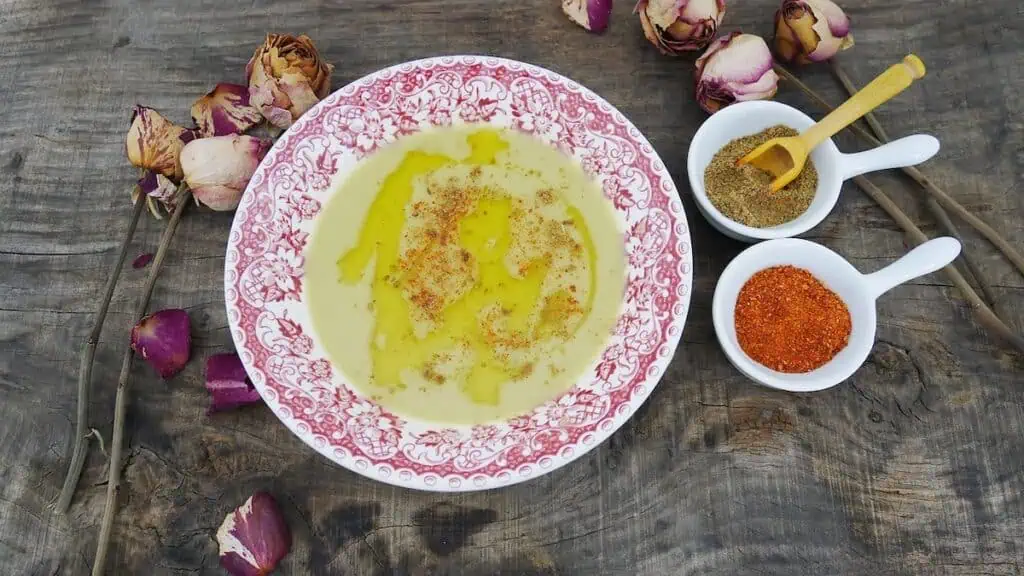
Not gonna lie, Bissara is not my fave food in Morocco. I had it at this mediocre restaurant in Marrakech and it just tasted kind of weird. It also had WAY too much olive oil on top and was greasy in my mouth.
However, I definitely want to try this Moroccan food again since I think I just had a really bad version of it.
Anyway, Bissara is a classic Moroccan soup that is served warm and made of a combination of fava beans, olive oil, cumin, garlic, and paprika.
Essentially, the fava beans are soaked overnight and then blended/cooked with the above ingredients to create a rich and creamy soup. It’s supposed to be super healthy and is served with a little bit of olive oil on top.
If you want to eat like a local, order it for breakfast You’ll be able to find it on the menu in most local breakfast joints/creameries that serve msemen, harira, omelets. etc.
But, if you’re not into soup for breakfast then you can order it later in the day since locals eat it whenever they want.
9. Matbutcha (GF/V/Veg)

The reason why Matbucha is so delicious is that is made using nothing but the freshest and most delicious ingredients. It is basically a delicious tomato salad that is served cold and eaten with your favorite type of bread.
Common ingredients include tomatoes, sweet bell peppers, garlic, a splash of olive oil, cumin, paprika, and a hint of chili.
These goodies are all chopped up, simmered, and stewed until they create one hella epic appetizer with an amazing array of flavors.
Feel free to dip it, spread it, or add it as a side to your meal since Matbucha is a great way to enjoy the authentic flavors of Morocco. I personally like to jazz mine up with some harissa for a bit of extra spice.
10. Chebakia (V/Veg)

I don’t normally eat dessert, but Chebakia is the exception to that rule. I usually eat it with my harira since it comes in this cute little flower shape and is super tasty.
To make Chebakia, you first have to prepare the dough out of flour, honey, sesame seeds, anise, orange blossom water, cinnamon, and other spices,
Once the dough is ready, it is shaped and deep-fried until it’s golden brown. It is then dipped in honey/rosewater syrup and left to cool before it is served.
It’s really good but a bit heavy and sweet. That’s why a lot of people eat it in Morocco during Ramadan.
11. Mint Tea

Mint tea is no joke in Morocco and people will drink it morning, noon, and night, especially at some of the best cafes in Marrakech, since any time is a good time to drink mint tea.
You 100% should be able to find it just about anywhere in the country. But, the way its served can be a little different based on where you are.
In the north, they like to serve it in tall glasses with sugar and mint. In the south, they like to serve it in a small teapot with sugar and mint on the side. Either way, it is delicious and a must-try in Morocco.
Just know that the mint in the south does tend to be better, with places like Marrakech and Tiznit having some of the best mint in the country.
Generally, to make mint tea, you boil the water and then add your fave packaged tea to it. We like to use the lion brand tea but you can use any tea you like.
When the tea is ready and has the right color, bring it out in a pot with mint and sugar on the side. People can then add as much sugar/mint to their tea as they like.
So, go out and drink as much mint tea as possible since there is really nothing more Moroccan than mint tea.
12. Kefta/Kefta Tajine (GF)

Kefta is kind of like a Moroccan-style meatball. It’s made of either ground beef or lamb (sometimes both) and is flavored with cumin, paprika, onion, lemon juice, coriander, and parsley.
Once the meat patties are formed and seasoned, they are then placed on skewers and cooked until done. You can also broil them in the oven if you are cooking at home.
Alternatively, you can also eat kefta as part of a tajine. It includes eggs as well as the kefta and amazing tomato sauce that is flavored with peppers, onions, and parsley.
If you’ve ever had Shakshuka or a Berber Omelet that is exactly what Kefta Tajine tastes like, except they add the Kefta to it. It’s a super good dish and is usually eaten with bread since you use that to scoop the tajine up.
Local Tip: If you want to try this dish as a vegetarian then just order a Berber Omelet. It’s basically the same thing as Kefta tajine but without the kefta.
13. Zaalouk (GF/V/Veg)

I love Zaalouk and eat it all the time. I see it served a lot as either an appetizer or as a free starter that is brought out with your bread and olives.
It’s basically a cold grilled eggplant and tomato salad that is usually eaten with bread. Generally, the eggplant is grilled, and then the tomatoes/spices are added to create this super awesome dish.
Typically, Zaalouk is flavored with paprika, cumin, garlic, and other spices to create a dish that I basically can’t stop eating.
I just love eggplant and had an awesome version at La Trattoria in Marrakech. I also love it because it’s one of the most romantic restaurants in Marrakech too.
They bring it right to your table and it is perfect when paired with their freshly baked bread.
14. Brochette (GF)
Brochettes are a Moroccan-style kabab that is made with lamb, chicken, kefta, or “mixed flavor”. If you opt for the latter then get ready to dig into a unique blend of lamb/beef hearts, kidneys, and livers.
Basically, these meats are slathered in salt and spices and then thrown on the fire so that they can be grilled to perfection.
They are then given to you with some bread as well as harissa, salt, and cumin (everything in Morocco comes with a side of cumin). Feel free to eat them on their own or pull them off the skewer with a nice piece of bread.
A great place to try these would be at the food stalls in Jemaa el Fna. These stalls can be a bit dodgy though, so only go to the ones that are frequented by locals.
Planning a Trip to Morocco? Let Me Help You Get It Right.
Not sure where to go, how long to stay, or how to put everything together? Book a private one-on-one Morocco travel consultation with me, and let’s figure it out together. I’ve lived in Morocco since 2023 and have spent years exploring the country. I’ll help you create or refine an itinerary based on your interests, travel style, timeframe, and budget—rather than giving you a generic itinerary that may not actually suit you. Already have an itinerary? That’s okay too. We can go through it together, and I’ll help you identify what works, what doesn’t, and where you can make improvements.
Stop second-guessing your Morocco trip. Let’s make a plan.
15. Cornes de Gazelle (Veg.)

The name “Cornes de Gazella” literally means Gazelle horns in English and refers to the unique, crescent moon shape of these amazing cookies.
Generally, these little sugar bombs are made from a flour-based dough that is stuffed with almond paste and sprinkled with orange flower water. The result? A delicious dessert that you cannot stop eating.
I like to eat mine with mint tea and I particularly liked the ones from Pâtisserie Bennis Habous the last time I was in Casablanca after deciding that Casablanca was worth visiting.
16. Mechoui (GF)
This traditional Moroccan dish is made of an entire lamb that has been marinated in a blend of spices and then slow-roasted for hours in an underground oven.
The result is super tend meat that basically melts in your mouth! Because of the sheer size of the meal, it’s a great dish to share with a large group at a restaurant.
Otherwise, just head to the street vendors in Marrakech’s Mechoi Alley after visiting the best souks in Marrakech.
They don’t speak much English, but none is really needed. Just point at yummy-looking meat and ask for a quarter (rubb) or a half (noose).
The person behind the counter will then cut you some and serve it to you with salt, cumin, and fresh bread on the side.
17. Amlou (GF/V/Veg)

I don’t know why Amlou doesn’t get more love from people because it really should. After all, it’s easily one of my favorite foods in Morocco and I buy it in Essaouira every chance I get.
It’s a bit like almond butter, only WAY better since it is sweeter and made with this beautiful combination of almonds (or peanuts), honey, and argan oil.
It’s definitely a bit of a breakfast food and a lot of people like to eat it with harcha, bread, msemen, and beghrir.
It’s also pretty special since argan trees are only found in Morocco. Therefore, you can really only find Amlou in Morocco since it’s made with argan oil.
But, the best part? If you’re looking for cool souvenirs in Morocco then go to the Medina of most Moroccan cities (preferably ones in the south since it is cheaper/better there) and pick up a giant bottle today.
You’ll see women making Amlou using traditional methods and can pick some up almost anywhere.
Local Tip: Other great jarred foods to take home with you are olive oil (eat this with bread and spreadable cheese to be super Moroccan) or Argan Oil. It has a nutty flavor and you can dip your bread in it.
Argan Oil is quite expensive though. So, always make sure you are buying REAL argan oil first. A great place to buy some is at a local cooperative where you know it is 100% pure.
Conclusion
I hope you have a better idea about some of the best food to eat in Morocco. Honestly, there are tons of amazing foods to try and I doubt you will have time to sample them all.
Plus, some of these amazing Moroccan dishes are not readily available in restaurants. In fact, things like loubia and seffa are really hard to find unless you have someone cook them for you in a local home.
So, if you are a bit overwhelmed and are not sure where to start then just try tajine, mint tea, couscous, msemen, harira, zaalouk, amlou, pastilla, kefta, tanjia, and chebakia.
These dishes are all very famous foods in Morocco and will give you a solid introduction to the beauty of Moroccan cuisine.
If you liked this post, be sure to join our email list and Facebook group for even more awesome Morocco travel tips.

