
Planning on driving in Morocco? If so then read this local’s guide. It has everything you need to know about driving a car in Morocco so that you can stay safe and have an amazing time.
See, I first moved to Morocco in January of 2023 and quickly started driving since I did not need an International Driver’s License, and my Moroccan boyfriend had a car.
Many signs are also in English so I knew where I was going.
However, I quickly learned that while Moroccans drive on the right side of the road (so the steering while is on the left side of the car) and have many of the same driving rules as the US, people here just don’t follow them.
So, people will tailgate you, people won’t wait for pedestrians at the crosswalk, people will honk at you as soon as the light turns green, and people will drive in the middle of two lanes.
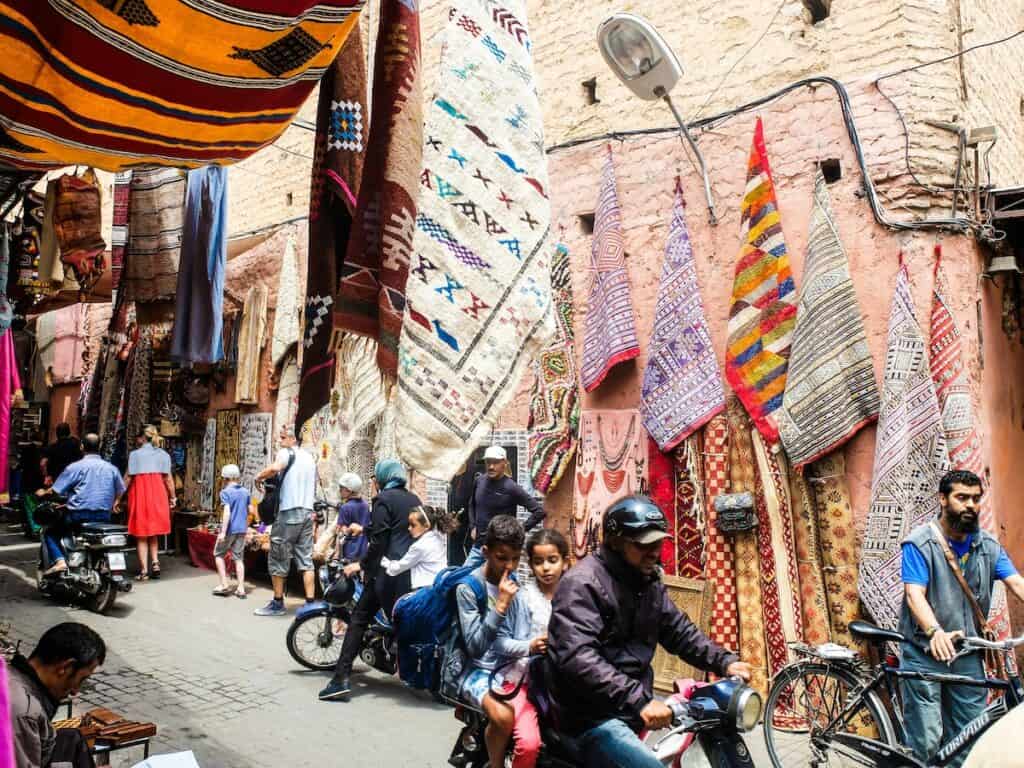
Therefore, I would avoid driving in major cities (when possible) since traffic can be insane and the streets can be filled with everything from motorbikes to camels to donkeys.
Instead, stick to driving in rural areas where there is less traffic and less chance of getting into an accident. I would also avoid driving in rural areas at night since there are no street lamps and it is difficult to see obstacles in the road.
Lastly, you should be okay with a 2WD vehicle since most roads are well paved and only minor roads in the Atlas Mountains require a 4WD vehicle.
Other than that, just enjoy the ride since driving in this country can be a lot of fun. You just need to know the un-offical rules so that you can have the best time possible.
This post may contain affiliate links. Please see my disclosure for more information. As an Amazon Associate, I earn a small commission from qualifying purchases.
DISCLAIMER: I am not a lawyer and am not an expert when it comes to Moroccan law and the legal system in Morocco. Please take everything I say as advice only. I am simply sharing my personal experience with driving in this country
Use my advice at your own risk and seek assistence from a legal professional if need be. I assume no liability should you read this article, use it, and get into legal trouble in Morocco.
Table of Contents
Renting a Car in Morocco?
If you’re renting a car in Morocco, or want to rent a car in Marrakech, then let me tell you about my #1 pick for the best car rental company in the country.
I always use and recommend Discover Cars since they offer free cancellation up to 48 hours in advance, have the best rates, and offer a reasonably priced, super comprehensive Full Coverage Policy.
Every time I want to book a rental car in Morocco, I go to the Discover Cars website to input my travel dates and my preferred pick-up location.
I then filter my ratings so that I can only see companies with a 7 out of 10 rating, or better. This way I can get the cheapest rates from the best companies. After all, I want to rent from a reputable company that cares about its customers.
Besides, many of these “cheap” companies are notorious for hidden fees and extra costs that make them anything but cheap after everything is said and done.
Things to Know Before Driving in Morocco
1. Always Have Cash Handy to Pay for Gas

Some gas stations do not accept credit cards. Therefore, I would suggest always having cash handy so that you can get gas whenever you need it.
FYI. ZIZ tends to be pretty cheap and attendants will always pump gas for you. Just tell them how much you want to spend and they will take care of the rest and might even clean your windows too.
At the time of writing, one liter of gas costs 15 Dirhams ($1.50), and one liter of diesel costs 12.79 ($1.79). Therefore, my best advice is to rent a small diesel car and use that to travel around the country to save money.
But, always look at your itinerary and make sure are not driving up any mountains since a small car like this might not have the horsepower that you need to get up a mountain.
Local Tip: No need to tip gas station attendants since this is part of the service. Overall, tipping in Marrakech and Morocco at gas stations is not expected. I learned this the hard way as a digital nomad in Morocco.
2. Don’t Be Afraid to Park in Paid Lots

Generally, I like to leave my car in a paid parking lot since it is a bit safer there. Yes, you will have to pay a bit more than on the street, but to me it’s worth it.
You’ll know a lot is paid when you see a blue sign with a white “P” on it. You also may need to hand over your keys to the attendant since they sometimes need to rearrange the cars if the lot gets full.
If you want to park on the street (except in Casablanca and Rabat), you usually have to pay an attendant in a brightly colored vest 2 Dirhams to keep your car safe during the day and 3 Dirhams to keep your car safe at night.
They don’t really care how long you leave your car since the price is the same. However, if you want to leave your car parked for more than a day, just let the attendant know.
Some streets do offer free parking and this is much more common in rural areas. However, I would always double-check and make sure there is no attendant before you just leave your car somewhere.
3. Try to Avoid Driving at Night

Lighting in major cities is typically alright. But, head out into the country and you won’t really find any street lights. Therefore, obstacles in the road become almost impossible to see.
Your best bet is to try to avoid driving in rural areas once the sun goes down. This way you don’t have to worry about hitting a rogue pothole or about hurting kids who dart out into the middle of the street to retrieve a soccer ball.
Trust me. the lighting in these areas sucks and everything from kids to donkeys to camels to horse-drawn carts can hang out in the middle of the road.
This even applies when renting a car in Essaouira since street lights are basically non-existent in the countryside.
Get Your Amazing 7-Day Morocco Itinerary Now!
Planning a trip to Morocco and not sure where to start? Or, maybe you don’t have weeks to sit and do research to create the perfect Morocco itinerary. If so then I am here to help. I have lived in Morocco with my Moroccan partner for YEARS. I created this custom, 45-page, 7-day itinerary so that you could plan the best trip possible with the least amount of stress. Customers are calling this itinerary “brilliant” and I think you will too. So, get yours now!
4. Always Wear Your Seat Belt
Drivers and passengers in Morocco are required to wear a seat belt at all times. I would advise you to follow this rule since there are police all over the place and you can get fined up to 300 Dirhams ($30.00).
You might be able to get away with it but it really isn’t worth it since you can also get one point on your license if you get caught.
5. Do NOT Drink and Drive

If you are planning to drink alcohol in Marrakech or anywhere else in Morocco then just know that drinking and driving is a big NO NO.
There is a zero-tolerance policy in Morocco when it comes to drinking and driving and you could get in a lot of trouble if caught after a fun night out in Marrakech.
No, I am not a lawyer, But, I would suggest that you do NOT drive if you have had any alcohol. Always play it safe and hire a cab because the consequences can be severe.
6. You Do Not Need an International Driver’s License (IDP) in Morocco
If you want to rent a car in Morocco and do a rad Morocco road trip then the good news is that you do not need an International Driver’s License.
I am from the United States (the same goes for Europe) and just had to show them my foreign driver’s license/credit card and I was good to go. This is true as long as you are legally in the country and leave every 3 months.
It may be a bit harder to rent a car if you are a new driver since car rental companies will put a larger deposit on your credit card to compensate for any potential damage.
The exception to this rule is if you have a carte Sejour and become an official resident in Morocco. Then you will need to exchange your foreign driver’s license for a Moroccan one within a year.
So, you’d have to take the driving test in French or Arabic and then get a new license in Morocco.
7. Watch Out for Scooters (and Everything Else)

In many Moroccan cities, you can find just about anything on the road. I have seen everything from donkeys to camels to bicycles to scooters to horses walking down the street.
Your job is to watch out for everything, especially scooters/mopeds since they like to ignore the rules of the road, dart out whenever they want, and drive wherever they like.
Be extra careful because if you get into an accident with one, it is automatically the car’s fault – even if the scooter just darted out right in front of you. Yeah, reason 3,562 why I hate driving a car in places like Marrakech.
8. Know the Speed Limit
Speed limits can vary but in general, the speed limit is:
- 45 km/h in small towns
- 60 km/h in urban areas
- 100 km/h on expressways
- 120 km/h on highways.
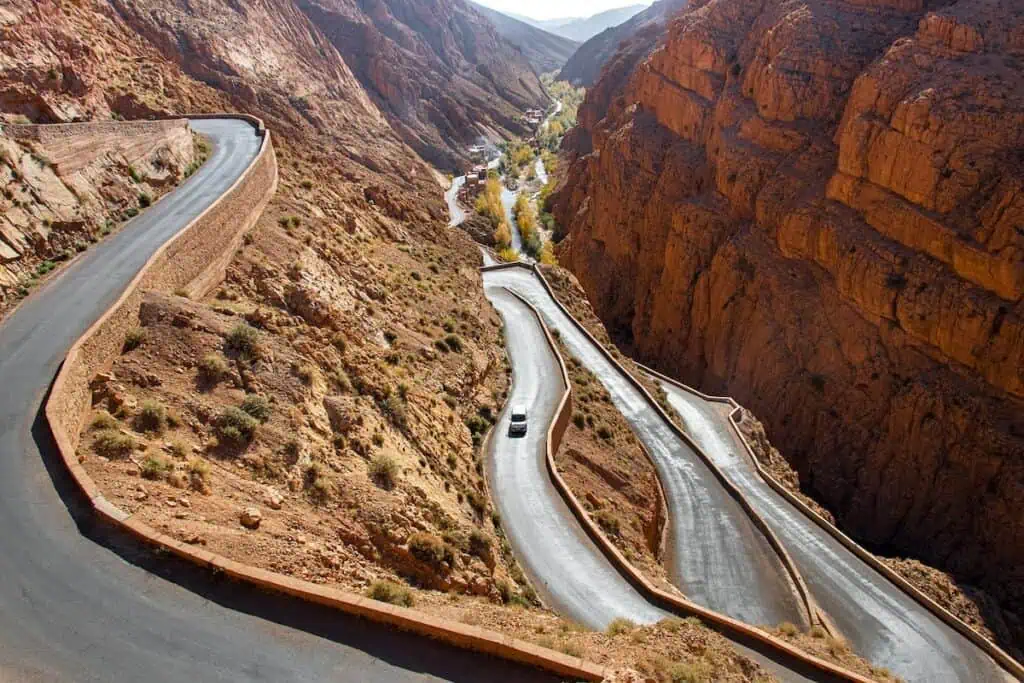
Overall, road quality is very good in Morocco, especially between major cities. So, you won’t have to worry too much about any insane potholes or roads that are falling apart, unless you are driving to really rural areas.
TBH, the road to the Agafay Desert is pretty bad and is a good example of one of the few roads that you need to be very careful on.
Additionally, some roads between major cities do have tolls that you will need to pay. For example, driving from Marrakech to Agadir costs 72 Dirhams and you can pay by card or by cash.
9. Foreign Cars Can Stay in Morocco for 6 Months
FYI, buying a car is extremely expensive in Morocco. So, even the crappiest car will probably cost you between $5,000 and $6,000.
Therefore, many expats like to bring their car to Morocco via the ferry from Spain.
You are absolutely allowed to do this (please remember I am not a legal professional and always consult a lawyer before you do anything) but the car can only be in the country for a maximum of 6 months.
The way around this is to bring your car into the country in July and then keep it in the country through June of the next year. This is okay because the two, 6 month periods fall within two different years.
Plus, there is no rule that would stop you from keeping your car in the country two consecutive, six-month periods.
Now, if you do bring your car into the country. it will be registered to your passport at the border. So, you will have to prove you still own the car (with documents) and have not sold it if you decide to leave the country by plane.
If you want, you can try to sell your car while in Morocco. However, most people won’t buy it since customs fees on imported cars are VERY high. They get even more expensive for older cars due to their impact on the environment.
10. Most Drivers Don’t Stop for Pedestrians at Crosswalks

To be fair, this can vary from city to city. In places like Agadir, Rabat, and Tangier, cars tend to stop to let pedestrians cross the street at crosswalks. However, this rarely happens in places like Casablanca and Marrakech.
In fact, I have been honked at for letting pedestrians cross the street. So, if you are a pedestrian PLEASE be careful when walking across the street.
Similarly, If you are a driver, don’t freak out if traffic won’t let you stop at a crosswalk. It happened and I definitely felt bad. However, just go with the flow of traffic and do whatever feels safest to you.
Additionally, many locals like to walk in the street and not on sidewalks. So, always keep an eye out for people in the street. My Moroccan partner does this all the time and I always yell at him for it since I don’t want him to get run over by a car.
Yeah, just a cultural difference since the sidewalks in the Morocco can sometimes be “not so great”.
11. Turn Signals Mean Nothing
I love turn signals and use them all the time at home. Sadly, they don’t mean a whole lot in Morocco. People will change lanes without using a turn signal and will put on a right-hand turn signal when they are going left.
This isn’t a huge problem if you are driving in the country but is something to be aware of when driving in congested cities. Not gonna lie, I really hate it which is why I limit my driving to smaller cities and rural areas.
Book Your Morocco Travel Consultation Now
Nervous about traveling to Morocco and are not sure where to start when it comes to planning your tour?
Want to see the country from the local perspective?
Have an itinerary planned but aren’t sure if it needs any tweaks?
Don’t worry! I have you covered! Book a private consultation now and let me help you plan your trip. These one-on-one calls are designed to tailor your itinerary according to your personal preferences and needs!
12. People Like to Drive in the Middle of Two Lanes
Unlike at home, people like to drive in the middle of two lanes. This is usually done so that motorbikes have more room to drive on either side of the vehicle.
Personally, I am not a fan since you have to honk and flash your lights to pass the vehicle. However, it is just a different way of driving and is common in Morocco.
So, don’t be surprised if people drive in the middle of two lanes and if you have to use your horn quite a bit to get them to move.
13. Always Stay Alert
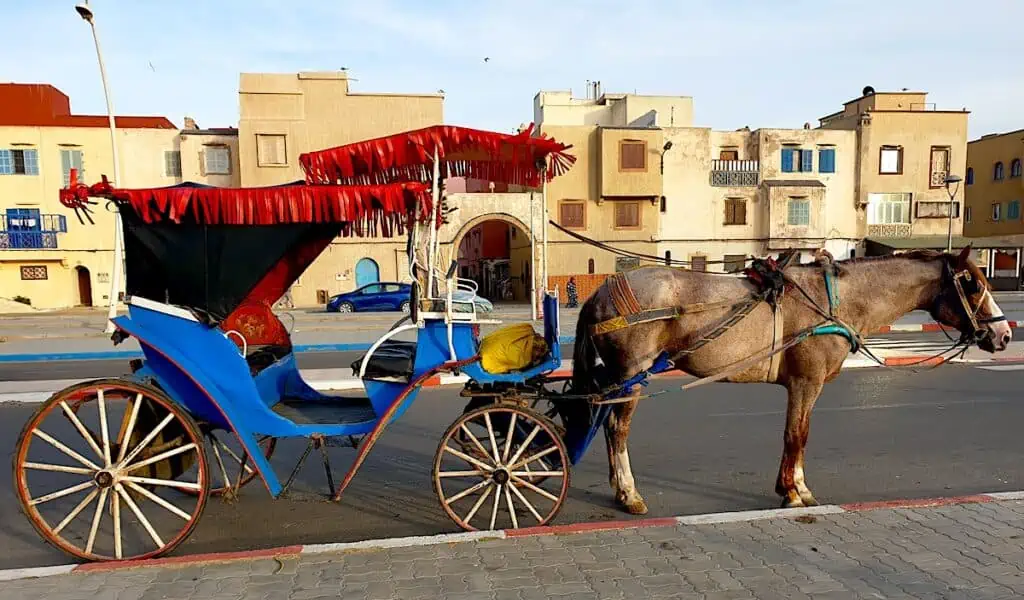
This is especially true in cities where driving is a bit erratic and the rules of the road are more like rough guidelines.
Therefore, when driving in Morocco, my best advice is to always stay alert. You never know when a pedestrian is going to dart out into a crosswalk or when a driver is going to make a wrong turn and completely halt traffic.
That being said. drivers are still pretty respectful of one another and accidents are pretty rare. However, I have definitely seen many accidents involving motorbikes while living in Marrakech. So, always be careful.
14. Moroccans Use Car Horns All The Time
Like in NYC, the minute the light turns green someone honks their horn so that you’ll move. Therefore, get ready to hear beeping horns all the time.
I am pretty used to it since I grew up in NYC and horns are a way of life there. It’s basically a way of saying, “Hey. I’m here. Can you please move out of the way?” So, be prepared for the horn if you are driving and someone wants to pass you.
15. Have All Your Documents with You
When picking up your rental car, make sure that you bring your passport and a valid driver’s license with you.
You’ll also need a credit card since the rental company will put a hold on the car (usually between $800 and $1000) to cover any potential damages.
Verify that your credit card is accepted by the rental company and has a high enough limit to cover any damages or extra charges.
Afterward, keep all your documentation with you (driving license, rental documents, registration, and insurance) while driving since there are frequent police checkpoints in Morocco, particularly along roads used by tourists.
Lastly, the minimum age for driving in Morocco is 18. However, many companies require drivers to be between 21 and 23 years old.
Get Your Amazing Morocco Safety Guide Today!
Planning a trip to Morocco and worried about safety? Or, maybe you don’t have time to scour the internet for mediocre safety tips from someone who has been to Morocco once. If so then let me help. I live in Morocco with my Moroccan partner and have developed these safety tips after spending years traveling in Morocco alone. I created this custom, 26-page document with 19 actionable tips to help you stay safe and have the best time possible. Get yours now and take the anxiety out of traveling to Morocco.
16. Clean Your Car Before You Drop It Off
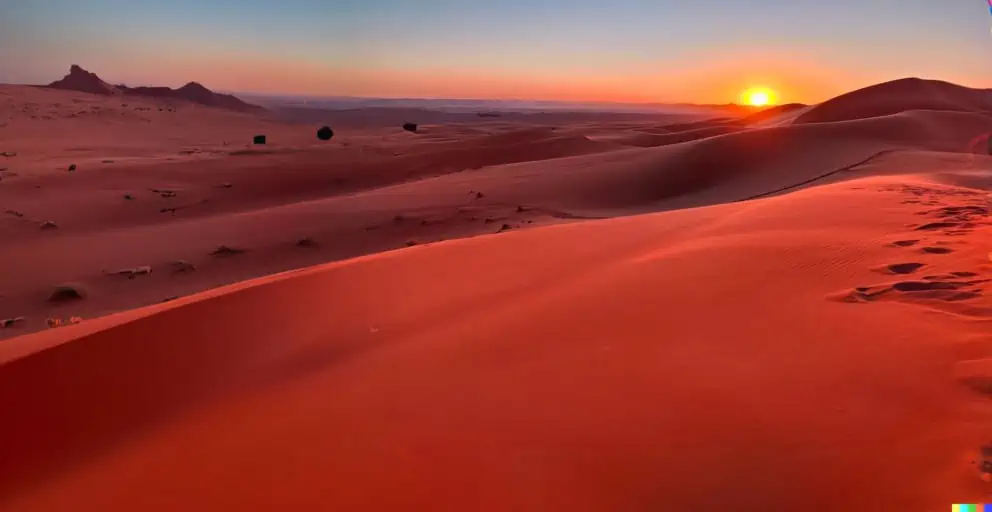
The roads in Morocco are notorious for being sandy and dusty. So, it is hard to keep your car clean while driving in Morocco.
Therefore, it’s a good idea to get your car cleaned before dropping it off since many car rental companies charge high fees for vehicle cleaning.
You can save money and avoid any problems by taking advantage of the car wash services at numerous gas stations, which offer thorough cleaning, both inside and out, for just a few dollars.
17. Avoid Driving in Winter If Using Mountain Passes

Snow comes to the Atlas Mountains every winter. While main roads remain accessible year-round, high-altitude passes can temporarily close after significant snowfall.
So, if you’re planning to drive through high passes, like Tizi-n’Tichka or Tiz-n’Test, you might find them closed from December to March.
Detours can be lengthy if these routes are inaccessible, so you may want to plan your trip through the Atlas Mountains for another time of year.
18. Download and Offline Map
Your cellphone signal will go in and out as you travel through more rural areas of Morocco, like the Atlas Mountains.
Therefore, it’s important to download a FREE offline map from Maps.Me or Google Maps. This way you can still navigate around the country even when you don’t have service.
If you want a better signal, I would also consider buying a Moroccan SIM card before you start your trip.
Is It Safe to Drive in Morocco?
Driving in Morocco can be a bit more dangerous than it is at home, especially if you plan to drive in major cities.
However, it is safe to drive in Morocco if you follow local laws, use caution, and stay alert. If you can, stick to driving in rural areas where there is a bit less traffic and avoid driving in rural areas at night since there aren’t many street lights.
If you’re worried about it just take the bus and sign up for an awesome Marrakech to Fes desert tour instead.
Conclusion
Overall, it is very safe to drive in Morocco and you should have an amazing time traveling around the country by car.
Just stay alert, avoid major cities when possible, and try not to drive at night. Do this and you will love cruising along Morocco’s extensive network of well-maintained roads.
After all, the only way you can get to some of the prettiest spots in Morocco is if you have your own set of wheels. So, grab a car and get driving!
If you enjoyed this post, be sure to join our Facebook group and email list for even more awesome Morocco travel info.
Finally, please consider buying me a coffee. It’s a great way to say “thank you” for all the free content you receive. No amount is too small and anything you can give will be greatly appreciated.

