
Marrakech is one of the best places in Morocco to shop for traditional crafts, textiles, food, and souvenirs.
The souks are packed with colorful ceramics, leather goods, rugs, lanterns, spices, and plenty of things you probably didn’t know you needed until you saw them.
I’ve spent a lot of time shopping in Marrakech, and I’ve learned that some things are absolutely worth bringing home while others aren’t worth the hassle or paying for the extra suitcase space.
So, if you’re wondering what to buy in Marrakech, where to shop, how much things cost, and how to avoid ending up with something you don’t actually want, here’s what I recommend.
This post may contain affiliate links. Please see my disclosure for more information. As an Amazon Associate, I earn a small commission from qualifying purchases.
Table of Contents
Quick Guide: What to Buy in Marrakech

1. Lanterns

Moroccan lanterns are one of my favorite things to shop for in Marrakech. They’re beautiful, come in countless shapes and designs, and can make a great statement piece in your home.
You’ll find everything from small decorative lanterns to large, elaborate fixtures made from metal and colored glass. Many are handmade, so you’ll see variations in the patterns and finish from one piece to another.
If you’re buying a lantern, think about how you’re going to get it home before you fall in love with a huge one. 😅 Some of the larger lanterns are surprisingly bulky, and the delicate glass can make them difficult to pack.
For something easier to travel with, look for a smaller lantern that can be wrapped and packed inside your luggage. If you want a larger piece, ask the shop whether they can ship it for you.
Also, don’t be afraid to visit several shops before buying. Prices can vary significantly, and there’s usually room to negotiate in the souks.
Remember, Moroccan lanterns make wonderful souvenirs. But, choose something that fits your luggage and your home—not just something that looks amazing hanging in a shop.
2. Rugs and Carpets

If there’s one thing you shouldn’t leave Marrakech without at least looking at, it’s a Moroccan rug.
Moroccan rugs come in an incredible variety of styles, colors, and patterns, and many are handmade by artisans using traditional techniques.
You’ll find everything from colorful Beni Ourain-style rugs to flat-weave kilims and more elaborate Berber designs.
The souks are full of rug shops, and shopping for one can be an experience in itself. Don’t be surprised if you’re invited to sit down, have some mint tea, and look through dozens of rugs before you find one you like.
Before buying, take your time and look closely at the rug. Ask about where it was made, what it’s made from, and whether it is actually handmade.
And don’t feel pressured to buy the first rug you see. Prices and quality can vary considerably, so it’s worth visiting several shops and comparing what you’re offered.
If you’re seriously considering buying a rug, give yourself plenty of time. It’s a much bigger purchase than a typical souvenir, and you’ll want to make sure you actually love it before figuring out how to get it home.
3. Ceramics and Tagines

Moroccan ceramics are another great thing to shop for in Marrakech, especially if you love colorful, handmade pieces.
You’ll find everything from plates and bowls to serving dishes, cups and traditional tagines. The designs vary by region and artisan, so it’s worth looking at several shops before deciding what you like.
If you’re buying ceramics, check each piece carefully for cracks, chips, or uneven glazing before you buy it.
Handmade pieces won’t necessarily be perfectly uniform, and that’s part of their charm. But you also don’t want to discover a damaged piece after you get home.
Tagines can make beautiful souvenirs, but keep in mind that they’re not all designed for cooking. If you actually want to use one on the stove, ask the seller whether it’s intended for cooking rather than simply serving or decoration.
And, of course, think about packing. Ceramics are fragile, so ask the shop to wrap your purchases securely before putting them in your luggage.
TBH, Ceramics are one of the easier Moroccan souvenirs to justify buying because you can actually use them at home. Just inspect them carefully and make sure they’re packed properly for the journey.
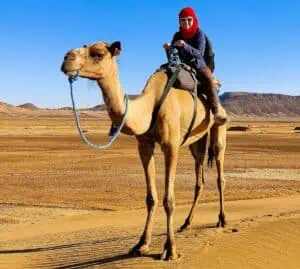
Planning 7 Days in Morocco? Start Here.
Skip the hours of research and guesswork. I created this 45-page, step-by-step Morocco itinerary based on my years of living and traveling in Morocco. It lays out where to go, what to see, and how to make the most of a 7-day trip, without spending weeks planning it yourself. Get the practical itinerary I wish every first-time Morocco traveler had.
4. Spices and Moroccan Pantry Items

Morocco is famous for its spices, so bringing a few home is an easy way to take a little bit of the country with you.
You’ll find colorful spice stalls throughout the souks selling everything from cumin and paprika to turmeric, cinnamon and saffron.
You can also find Moroccan spice blends such as ras el hanout, which can contain a long list of different spices depending on the blend.
If you don’t cook much, you can also look for other Moroccan pantry staples such as amlou, a delicious spread made with almonds, argan oil and honey. It’s one of my FAVORITE things of all time. SOOOO GOOOD.
Moroccan olive oil is another good choice if you’re a fan. I love the olive oil here and think it’s worth looking for locally produced bottles to bring home.
When buying spices, I recommend shopping somewhere that looks clean and busy rather than buying huge quantities from the first stall you see.
And don’t feel like you need to buy a massive bag just because the price seems cheap. Remember that you still have to get it home!
If you’re buying food products, check the packaging and expiration date, particularly if you’re purchasing something that’s already packaged.
I love buying spices and pantry items because they make inexpensive, easy-to-pack souvenirs. They’re a solid option if you want to bring something home that you’ll actually use.
5. Leather Goods
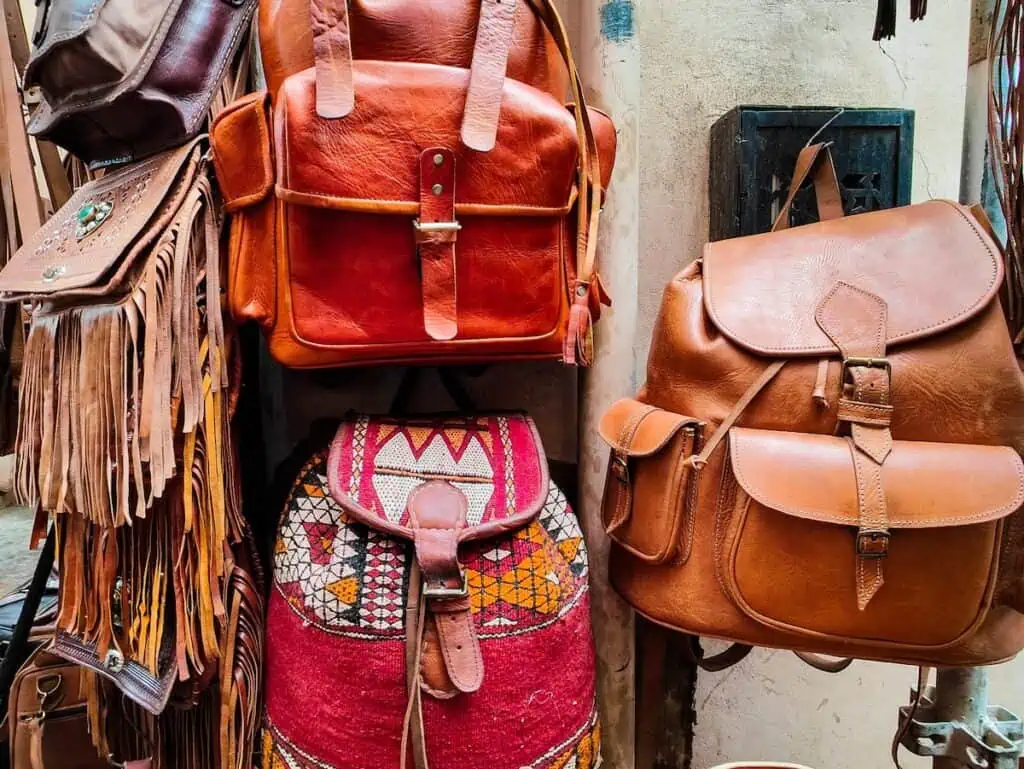
Leather goods are everywhere in Marrakech, and you’ll find everything from handbags and wallets to belts, backpacks, shoes, and jackets.
Moroccan leather is particularly well known, and you’ll often see leather products in a huge range of colors and styles.
If you’re looking for something practical to bring home, a leather bag or wallet can be a much easier purchase than some of the larger souvenirs.
Before buying, take a close look at the quality. Check the stitching, hardware, lining, and overall finish, and don’t be afraid to compare similar products at several shops.
You’ll also hear plenty of claims about whether something is “real leather,” so don’t assume that every seller’s description is accurate. If the material and quality are important to you, ask questions and inspect the item carefully.
And remember that leather can have a strong smell, particularly with newly made products. If you’re sensitive to smells, you may want to let your purchase air out once you get home.
Leather goods can be some of the most useful things you can buy in Marrakech. Take your time, compare quality and prices, and choose something you’ll actually use rather than buying simply because you’re in the souks.
6. Argan Oil
Argan oil is one of the most popular things to buy in Morocco, and Marrakech is a great place to pick some up.
You’ll find both culinary argan oil and cosmetic argan oil, so make sure you know which one you’re buying. Culinary argan oil is made from roasted argan kernels and has a nutty flavor, while cosmetic argan oil is typically used for skin and hair.
If you’re buying it as a beauty product, look for a bottle with a clear ingredient list rather than buying something simply because the label says “100% argan oil.” You can also ask where the oil was produced and how it was made.
You’ll see argan oil for sale everywhere from souks to cooperatives and beauty shops. Prices can vary quite a bit, so it’s worth comparing products rather than buying the first bottle you see.
Whatever you do, be sure to buy argan oil from a reputable shop or cooperative. Additionally, check the ingredients, and make sure you’re buying the type you actually want. And remember that a tiny bottle goes a surprisingly long way!
7. Moroccan Tea and Teapots

Moroccan tea is an important part of Moroccan hospitality. So, a traditional tea set can make a fun and useful souvenir from Marrakech.
You’ll find beautiful Moroccan teapots in all kinds of styles, from simple silver-colored pots to elaborate decorative designs. You can also buy the small glasses traditionally used to serve mint tea.
If you actually plan to use your teapot at home, ask whether it’s intended for serving tea or for use directly over heat. Some are just decorative and aren’t designed for the stovetop.
You can also pick up loose-leaf green tea (I love the Lion brand) and dried mint to recreate Moroccan mint tea at home.
Overall, a small teapot and a few tea glasses make a much easier souvenir to pack than some of the larger Moroccan homewares. Plus, you’ll actually have a reason to use them once you get home.

Book Your Morocco Travel Consultation Now!
Nervous about traveling to Morocco and are not sure where to start when it comes to planning your tour?
Want to see the country from the local perspective?
Have an itinerary planned but aren’t sure if it needs any tweaks?
Don’t worry! I have you covered! Book a private consultation now and let me help you plan your trip. These one on one calls are designed to tailor your itinerary according to your personal preferences and needs!
8. Moroccan Clothing and Babouches

Marrakech is a fun place to shop for Moroccan clothing, especially if you want something that feels genuinely connected to the culture rather than a generic souvenir.
You’ll find kaftans, djellabas, scarves, tunics, and other traditional clothing in the Marrakech souks, along with colorful leather slippers known as babouches.
Babouches come in countless colors and styles, from simple everyday slippers to elaborate embroidered versions. They’re lightweight, easy to pack, and make a great gift.
If you’re buying clothing, take your time with sizing and don’t assume that everything is made to standard Western sizes. If possible, try things on before buying.
And don’t feel like you need to dress traditionally just because you’re in Morocco. These pieces can be fun to wear at home, but choose something you’ll actually use.
All in all, Babouches are one of my favorite easy-to-pack Moroccan souvenirs, while a kaftan or djellaba can be a great choice if you want something more substantial. As always, compare quality and prices before you buy.
I love my djellaba too since it looks nice, is super comfy, and reminds me of how much I love Morocco.
9. Moroccan Food

Morocco has plenty of delicious food products that make great souvenirs, especially if you want to bring home something you’ll actually use.
Some of my favorite things to look for include:
- Amlou: a spread made with almonds, argan oil, and honey
- Moroccan olive oil
- Harissa and other sauces
- Moroccan olives, which come in countless varieties and flavors
If you’re buying food from the souks, look for stalls that are clean and busy, and check packaged products for ingredients and expiration dates. That being said, many freshly prepared foods probably won’t have that info.
Also think about how you’re going to get everything home. Olives, amlou, and olive oil can be heavy, and you definitely don’t want a jar leaking all over your suitcase.
If I’m being honest. Moroccan food is one of my favorite types of souvenirs because it doesn’t just sit on a shelf. Instead, it gives you a way to enjoy a little taste of Morocco after you get home.

Want to Feel Confident Traveling in Morocco?
Get the practical safety advice I wish every first-time visitor had before their trip. I’ve lived in Morocco since 2023 and have spent years traveling around the country. I created this 26-page Morocco Safety Guide to give you practical, realistic advice for navigating Morocco confidently—from avoiding common tourist scams to knowing what to expect and how to handle situations that can catch first-time visitors off guard. No fear-mongering. No generic advice from someone who spent a week in Marrakech. Just practical tips from someone who actually lives here.
10. Pouffes

Moroccan pouffes are another popular home décor item you’ll see throughout the Marrakech souks. They’re essentially leather-covered cushions that can be used as footrests, extra seating, or even small tables.
You’ll find them in all kinds of colors and designs, from simple leather pouffes to elaborately embroidered versions.
One thing to keep in mind: many pouffes are sold unstuffed.
This makes them much easier to bring home because they can be folded flat and packed in your luggage. You can stuff them yourself once you get home with blankets, pillows, towels, or other soft items.
As with other leather goods, check the stitching and overall quality before buying, and compare prices at several shops.
Generally speaking, an unstuffed pouffe is a surprisingly practical Marrakech souvenir. It takes up very little space in your suitcase and can become a useful piece of furniture once you get home.
11. Moroccan Silver
Moroccan silver can make a beautiful and unique souvenir, particularly if you’re looking for something a bit more special than a typical Moroccan trinket.
You’ll find silver jewelry, decorative pieces, trays, and other handmade items in the souks. Some pieces are beautifully detailed and may incorporate traditional Moroccan or Amazigh designs.
If you’re buying silver, ask about the purity and look for appropriate markings rather than assuming that everything described as silver is solid silver.
Take your time, compare similar pieces, and don’t be afraid to ask questions about where the item was made.
Silver pieces can also vary significantly in price depending on their weight, craftsmanship, and design. Therefore, it’s worth shopping around before making a purchase.
If you find a silver piece you really love, take your time and make sure you understand exactly what you’re buying before negotiating the price.
A beautiful handmade piece can be a much more meaningful souvenir than something mass-produced.
12. Jewelry

Moroccan jewelry makes a beautiful souvenir, and you’ll find plenty of unique pieces scattered throughout the souks.
Look for necklaces, bracelets, earrings, rings, and traditional Amazigh-inspired pieces. Designs can range from simple and modern to elaborate pieces with colorful stones, enamel, or intricate metalwork.
As with silver, don’t assume that every piece is made from the material the seller claims. If you’re buying something valuable, ask about the metal and stones, and look for appropriate markings or documentation when available.
I also recommend looking at several shops before buying. You’ll often see similar styles at very different prices, and it’s much easier to negotiate when you have an idea of what comparable pieces are selling for.
Personally, I think jewelry is one of the easiest Moroccan souvenirs to pack, and you can find pieces that feel genuinely special without taking up much room in your suitcase.
Take your time and buy something you actually love rather than something you feel pressured to purchase.
13. Zellige (aka Mosaic Tile Art)

Zellige is one of Morocco’s most distinctive traditional crafts, and you’ll find it incorporated into everything from tables and trays to mirrors, tiles, and decorative pieces.
The colorful geometric designs are particularly beautiful if you’re looking for something that feels uniquely Moroccan. However, full-size zellige tiles aren’t exactly the easiest souvenir to squeeze into a suitcase.
Instead, look for smaller decorative pieces that incorporate zellige patterns, such as trays, mirrors, or tabletops. These can give you the look without requiring you to figure out how to transport a stack of tiles home.
As with other handmade products, expect some variation in color, shape, and finish. That’s part of what makes traditional Moroccan craftsmanship so appealing.
So, if you love Moroccan design but don’t want to deal with shipping something enormous, look for a smaller zellige-inspired home décor piece that you can actually get home safely.
Where to Shop in Marrakech?

The Marrakech souks are the obvious place to start if you’re looking for traditional Moroccan crafts and souvenirs.
They’re spread throughout the medina, and you’ll find everything from leather bags and babouches to lanterns, ceramics, rugs, and jewelry.
However, don’t feel like you have to buy everything from the first shop you see. The souks are huge, and you’ll often find similar products in multiple stores.
If you’re looking for something specific, it’s worth exploring different parts of the medina and comparing what you find.
You can also look beyond the souks for cooperatives, artisan shops, and specialty stores, particularly if you’re looking for higher-quality products or something specific.
And if you’re buying a rug, large piece of furniture, or another substantial item, I’d spend more time researching the seller before handing over a significant amount of money.
For a more detailed breakdown of the different souks and what you’ll find in each one, check out my guide to the best souks in Marrakech.
Don’t treat shopping in Marrakech like a checklist. Give yourself time to wander, compare shops, and see what catches your eye. If you’re anything like me, you’ll probably find things you weren’t even looking for.
How to Haggle & Shop Smart in Marrakech
Haggling is part of shopping in the Marrakech souks, but you don’t need to turn every purchase into a battle over the lowest possible price.
If you’re interested in something, ask the price, consider what you’re comfortable paying, and make a reasonable offer. If you can’t agree on a price, it’s perfectly fine to walk away.
A few things that will make shopping easier:
- Compare prices. Look at similar items in several shops before buying.
- Don’t start negotiating unless you’re actually interested.
- Don’t feel pressured to buy. You can always say no and keep walking.
- Check the quality. Look at stitching, materials, finishes, and hardware before agreeing on a price.
- Ask questions. If something is described as handmade, leather, or silver, ask the seller what it’s made from.
- Have a sense of humor. Shopping in the souks can be intense, but it doesn’t have to be stressful.
You also don’t need to haggle at places with fixed prices, such as many established shops, supermarkets, and restaurants.
Remember, the goal isn’t to get the absolute lowest price possible. Find something you love, agree on a price that feels fair to you, and enjoy the experience.
Things I Wouldn’t Buy in Marrakech

Not everything you see in the Marrakech souks needs to come home with you. I’ve learned that some purchases are much more trouble than they’re worth, especially when you’re dealing with limited luggage space or questionable quality.
Antique or supposedly antique items: I’d be particularly cautious with anything being sold as a genuine antique. Unless you know what you’re looking at, it can be difficult to determine an item’s age, authenticity, or provenance.
Extremely large or fragile items: That enormous lantern or beautiful ceramic table might look incredible in the shop, but think about how you’re actually going to get it home before buying it.
Anything you don’t really want: This sounds obvious, but the souks can be overwhelming, and enthusiastic salespeople can make it easy to buy something simply because you feel pressured. If you wouldn’t buy it at home, don’t buy it just because you’re on vacation in Marrakech.
Generally, the best souvenir is something you genuinely love and can realistically get home. Don’t let the excitement of the souks, or an overzealous salesman, talk you into a purchase you’ll later regret.
How to Get Your Purchases Home
One thing people don’t always think about when shopping in Marrakech is how they’re going to get everything home.
A small bag of spices or a pair of babouches is easy. A rug, lantern, ceramic dish, or pouffe is a different story.
A few things to keep in mind:
- Ask the seller how they’ll package your purchase before you buy it.
- Fragile items should be wrapped securely, especially ceramics and glass.
- Unstuffed pouffes are much easier to pack than stuffed ones.
- Rugs can usually be rolled tightly, and larger purchases may be available for shipping.
- If you’re buying something large, ask about international shipping rather than trying to squeeze it into your suitcase.
- Keep receipts and any shipping paperwork for larger or more expensive purchases.
If you’re flying home, also check your airline’s baggage allowance before buying anything particularly large or heavy.
One Morocco travel tip, think about transportation before you buy, not after. There’s nothing worse than falling in love with a beautiful Moroccan lantern and then realizing you have absolutely no idea how you’re getting it home.
What Can You Bring Home From Morocco?

Most of the souvenirs you’ll find in Marrakech are easy to take home, but it’s worth thinking about size, weight, and customs restrictions before you buy.
Small items like jewelry, spices, tea, clothing, leather goods and small ceramics are generally easy to pack. Larger purchases such as rugs, lanterns, pouffes and furniture may require special packaging or shipping.
If you’re bringing food, oils or other products home, check the current customs rules for the country you’re returning to before you buy. Rules can vary depending on where you’re traveling.
And if you’re buying something valuable, keep your receipt and any documentation from the seller. This is particularly useful for expensive jewelry, artwork, or larger purchases.
If you’re unsure whether you can bring something home, check the rules before buying it. It’s much easier to find out in the souk than at the airport.
Frequently Asked Questions About Shopping in Marrakech
What is worth buying in Marrakech?
Some of the best things to buy in Marrakech include Moroccan rugs, leather goods, lanterns, ceramics, argan oil, spices, jewelry, babouches, tea sets, and other handmade Moroccan crafts.
Do you have to haggle in Marrakech?
Haggling is common in the souks, particularly when buying handmade goods and souvenirs. You don’t need to haggle over everything, though, and you shouldn’t negotiate unless you’re genuinely interested in buying something.
How much should you pay for a Moroccan rug?
There’s no single price for a Moroccan rug. Cost depends on its size, materials, craftsmanship, design and whether it’s handmade. I recommend visiting several shops and comparing quality and prices before making a purchase.
Is Moroccan argan oil worth buying?
Yes, particularly if you buy a good-quality product. Just make sure you know whether you’re buying cosmetic or culinary argan oil, check the ingredients, and purchase from a reputable seller.
Can I bring spices and Moroccan food home?
Often, yes, but customs rules vary depending on your destination. Check the current rules for your home country before bringing food, oils, or other agricultural products home.
Can I ship a rug or large purchase from Marrakech?
Yes. Many shops that sell rugs and larger items offer shipping services. If you’re making an expensive purchase, ask about the shipping cost, insurance, tracking, and what happens if the item is damaged during transit.
Where is the best place to shop in Marrakech?
The souks in the medina are the most obvious place to start, but there are also cooperatives, artisan shops, and specialty stores. The best option depends on what you’re looking for and whether you’re prioritizing price, convenience, or quality.
What should I avoid buying in Marrakech?
I’d be particularly cautious about supposedly antique items, very large or fragile purchases, and anything you’re buying simply because a seller pressured you into it. Take your time and only buy things you genuinely want.
Planning a Trip to Marrakech?
Shopping is just one part of experiencing Marrakech. Check out my other Marrakech guides to help plan the rest of your trip:
- Unique Things to Do in Marrakech
- Best Souks in Marrakech
- Best Hammam in Marrakech
- Marrakech Restaurants With Alcohol
- What Not to Do in Marrakech
- Morocco Travel Tips You Need to Know Before Your Trip
Shopping in Marrakech is about more than buying souvenirs. It’s also an essential part of experiencing the city. Take your time, wander through the souks, compare prices, and don’t be afraid to walk away if something doesn’t feel right.
And most importantly, don’t feel like you have to buy something just because you’re in Marrakech. The best souvenirs are the things you genuinely love and will still enjoy once you’re home. Happy shopping! 🇲🇦
And if you found this post useful, be sure to join our email list and Facebook group for even more awesome travel info.
Finally, please consider buying me a coffee. It’s a great way to say “thank you” for all the free content you receive. No amount is too small and anything you can give will be greatly appreciated.


Can you tell me where Chay Abdelhadi’s leather pouf workshop is located?
I don’t have an exact address. I would ask your hotel to tell you where it is. Or ask poeple in the area to take you there.
How much should you expect to spend on a leather Pouf?
I’ve paid between 125 and 165 Dirhams but it can vary based on the quality and size.